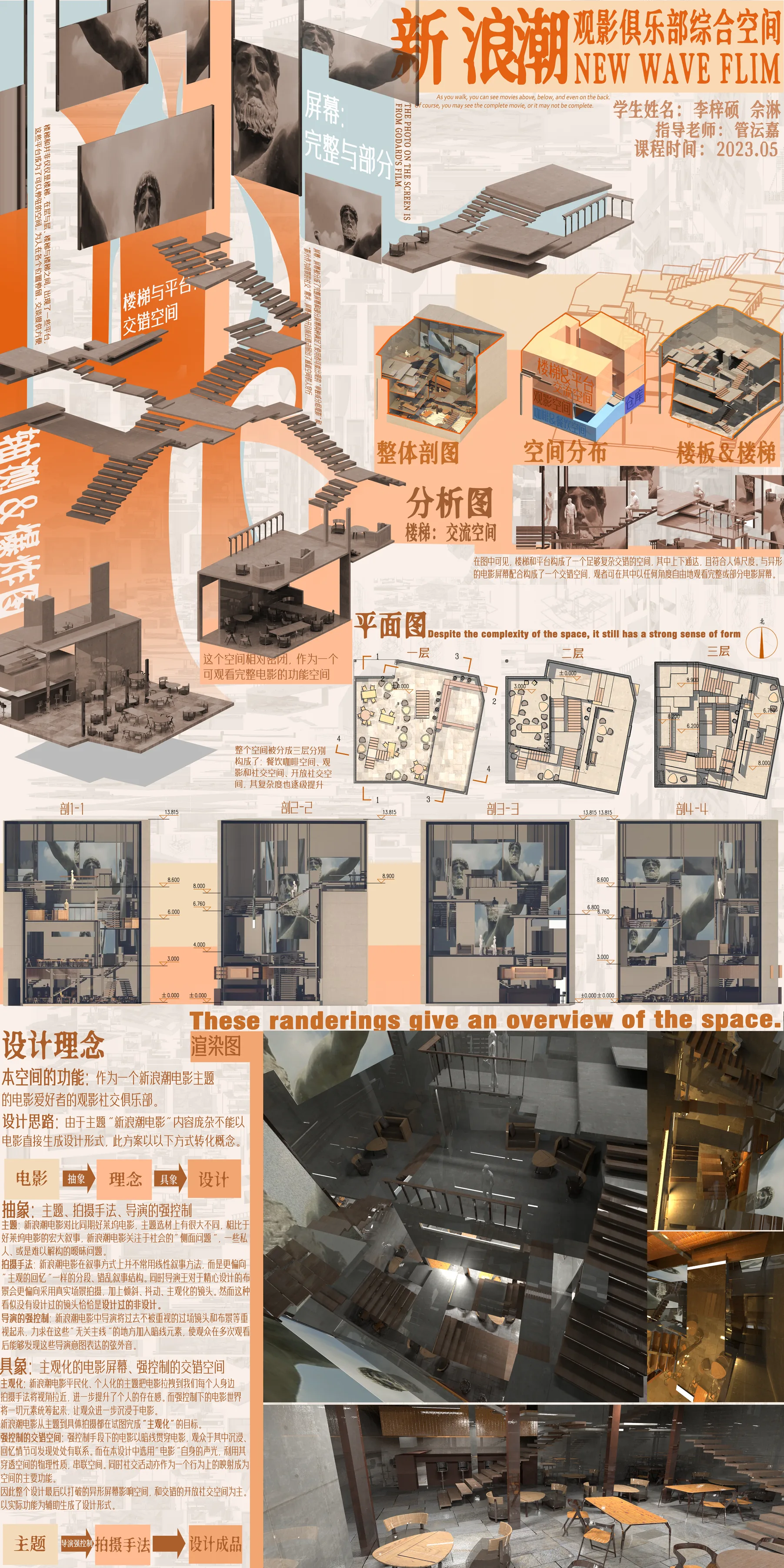
New Wave Film Club
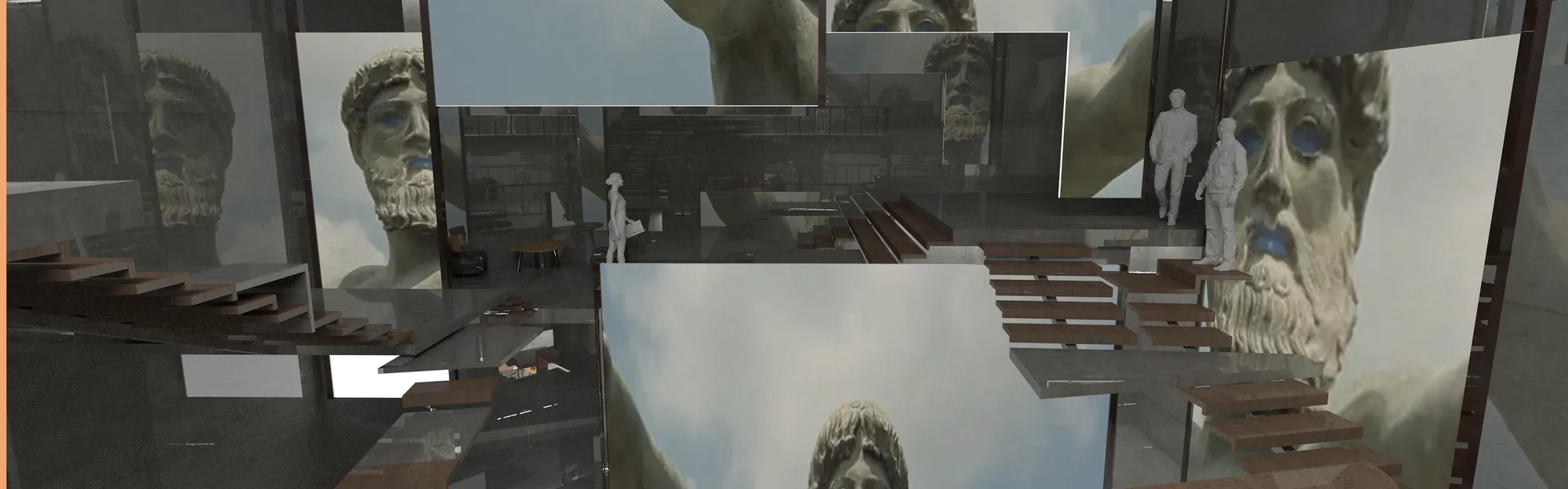
A club for the New Wave
What the space is for: a social viewing club for film lovers, themed on the New Wave.
Approach: the theme, New Wave cinema, is too large and varied to generate a design form directly from the films, so the scheme translates the concept in the following way.
Film → (abstraction) → idea → (concretisation) → design
Translated from the Chinese original · Source: Board, “Design concept”
Abstraction: theme, technique, control
Theme: compared with Hollywood films of the same period, New Wave films chose very different subjects. Instead of Hollywood’s grand narratives, they turned to the ‘side issues’ of society, such as private matters or ambiguous ones that are hard to take apart.
Technique: New Wave films rarely tell a story in a straight line. They lean towards a fragmented, disordered structure, like ‘subjective memory’. Directors also tend to shoot in real places rather than on carefully designed sets, with tilted, shaking, subjective camera work. These shots look undesigned, and that is exactly how they were designed.
The director’s strong control: New Wave directors took seriously the transition shots and settings that used to be ignored, adding hidden threads in places ‘off the main plot’, so that viewers who watch more than once discover the undertones the director meant.
Translated from the Chinese original · Source: Board, “Design concept”
Concretisation: subjective screens, interlocking space
Subjective: the everyday, personal subjects of the New Wave pull film close to each of us, and the camera work brings the viewpoint closer still, strengthening the sense of personal presence. Under strong control, every element of the film world is coordinated so that the viewer is drawn further in. From subject to shooting, New Wave films try to make film ‘subjective’.
Interlocking space under strong control: films made under strong control run hidden threads through the whole, and viewers who are immersed in them, recalling the plot, find connections everywhere. In this design, the film’s own sound and light, which physically pass through space, are used to link the spaces. Social activity, as a behavioural echo of this, becomes the main function of the space.
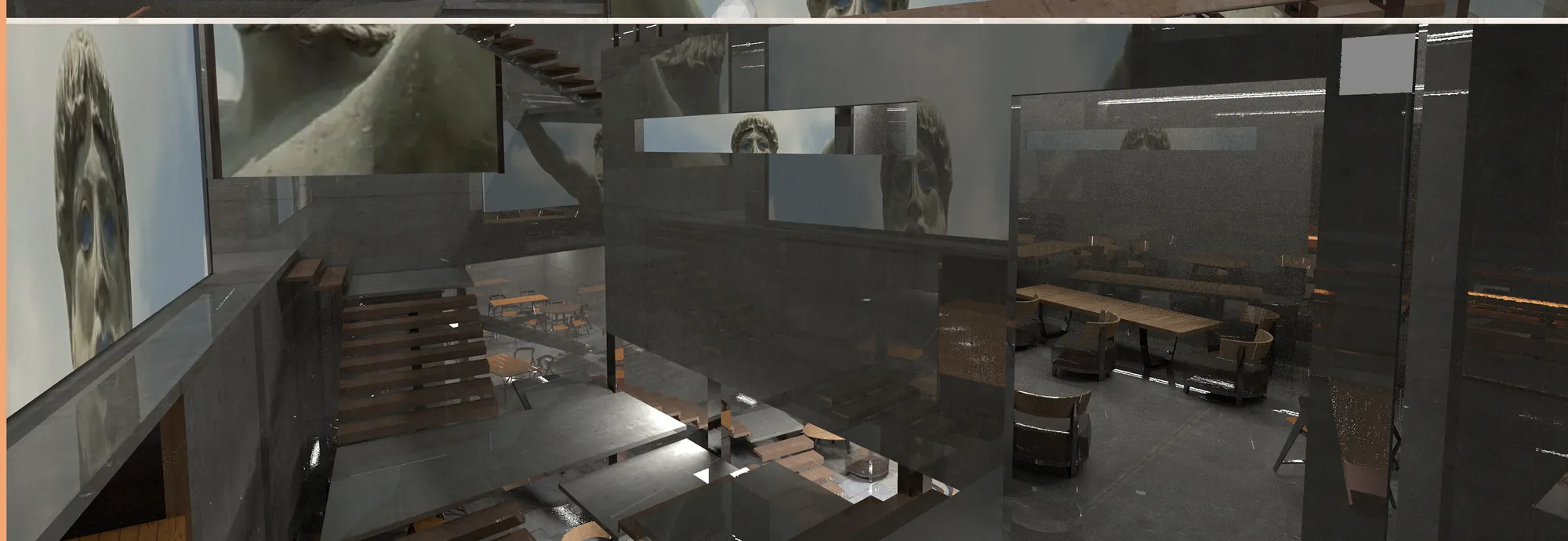
So the design is finally led by broken, irregular screens that shape the space and by interlocking open social spaces, with the actual functions helping to generate the form.
Translated from the Chinese original · Source: Board, “Design concept”
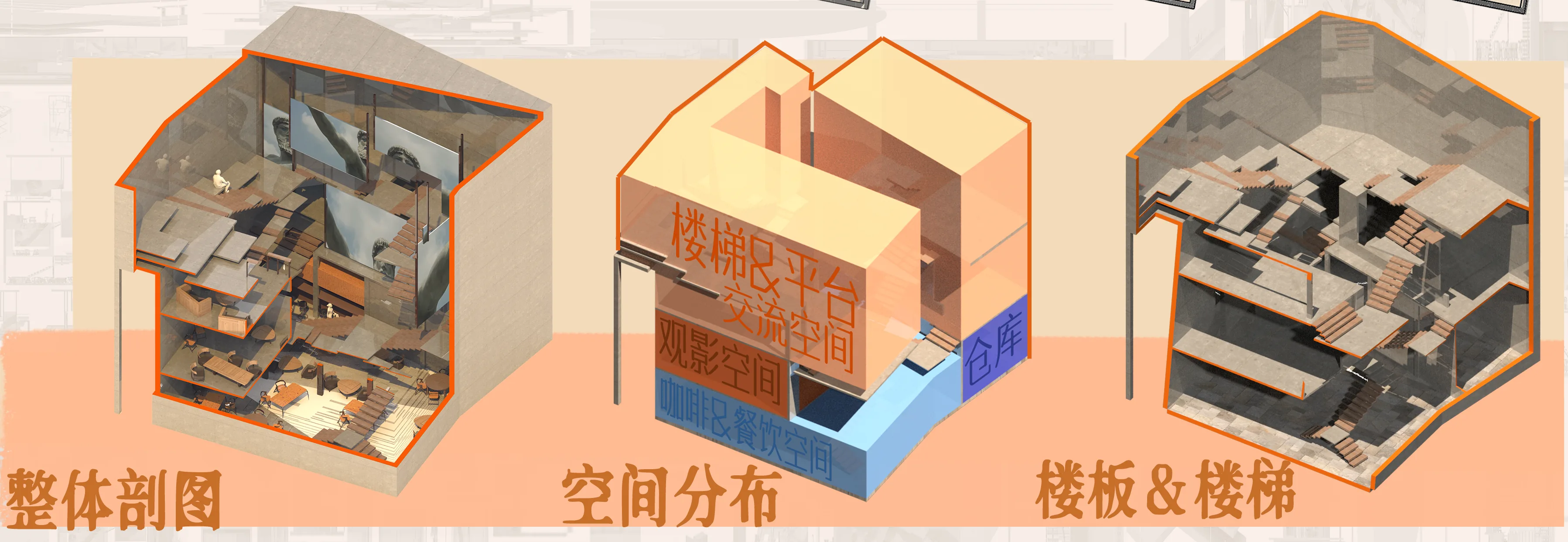
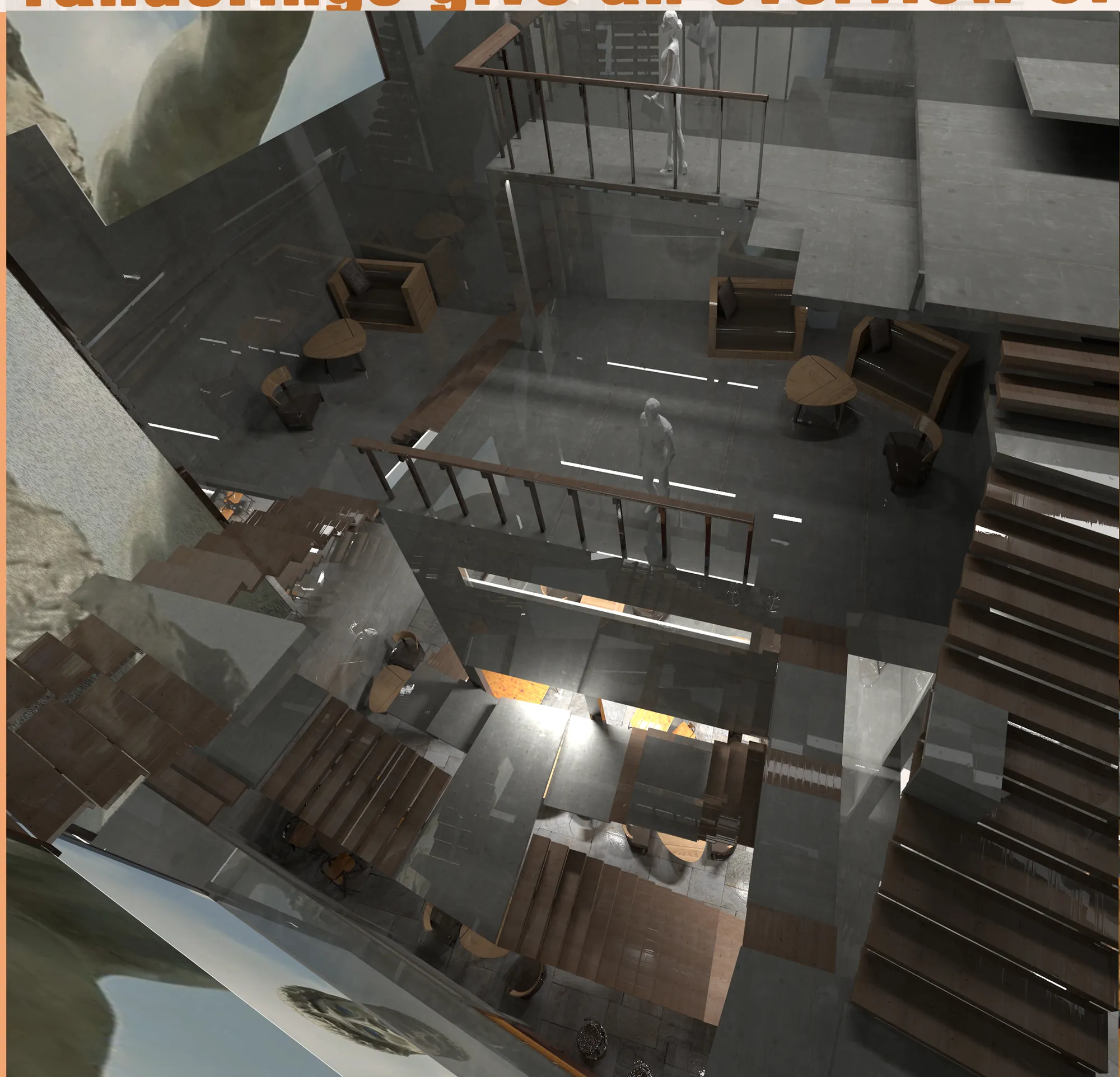
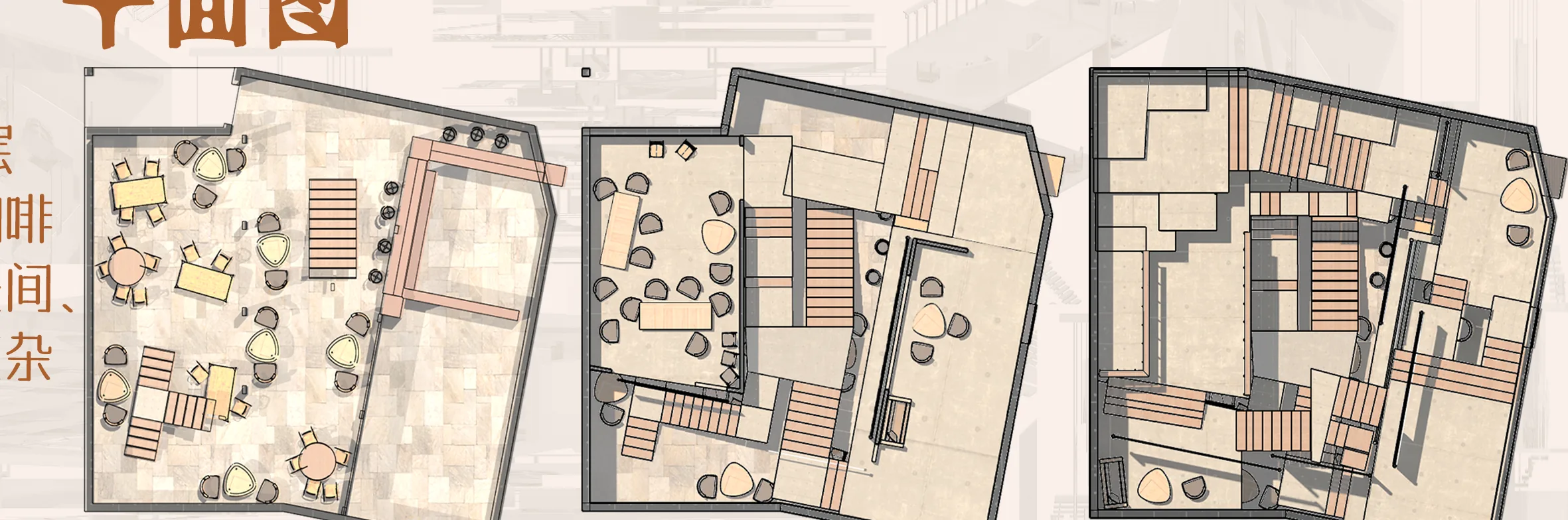
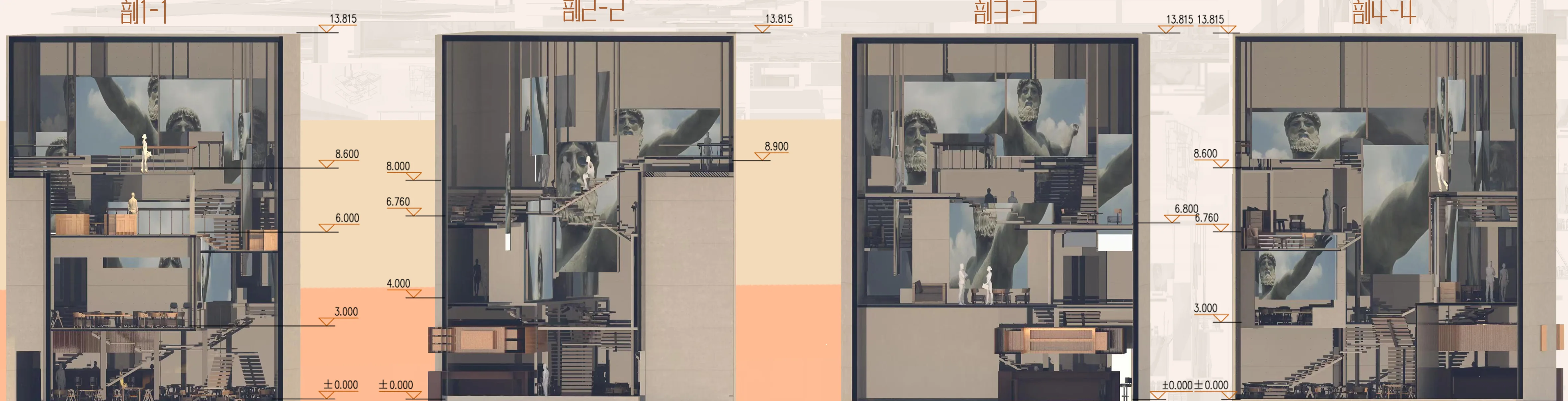
Three floors
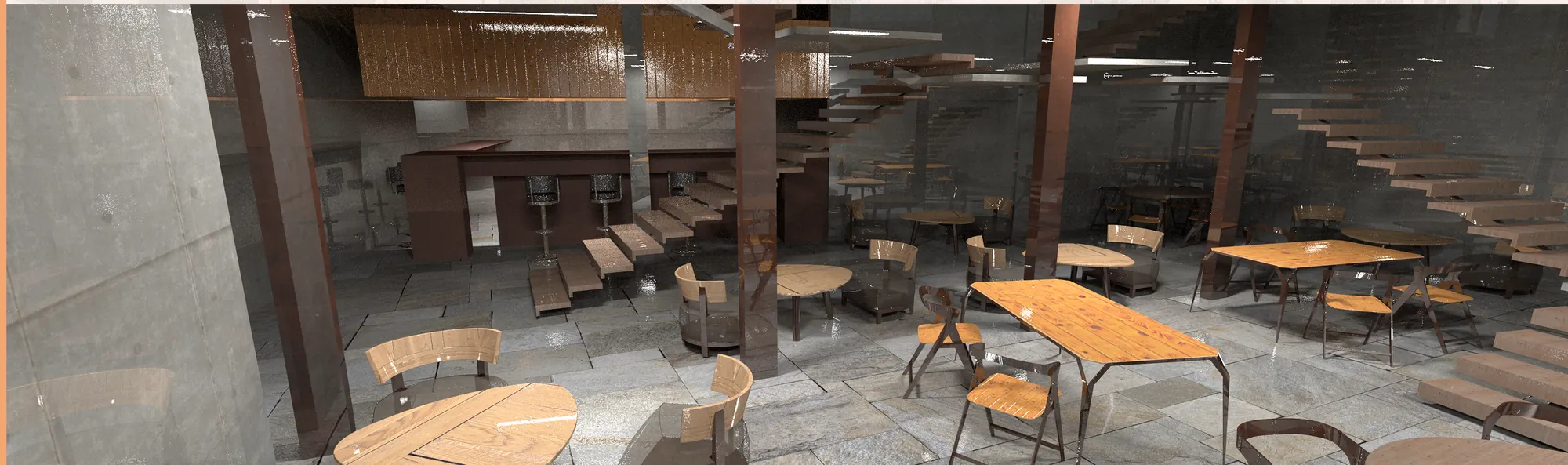
The space is divided into three floors: a café and dining space, a viewing and social space, and an open social space, each more complex than the last.
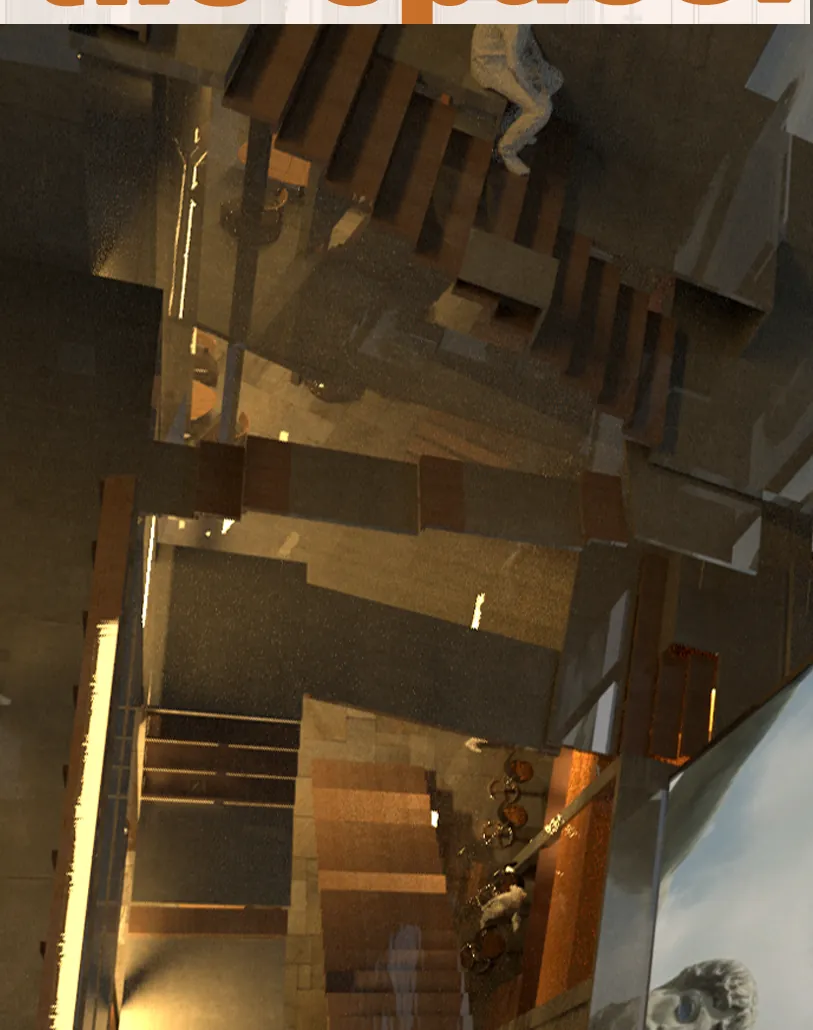
As the drawing shows, the stairs and platforms form a space complex and interlocking enough, connected up and down and still at human scale. Together with the irregular screens it makes an interlocking space in which viewers can watch a whole screen or part of one from any angle.
Translated from the Chinese original · Source: Board, second version
Views
Board