The Dominican Republic
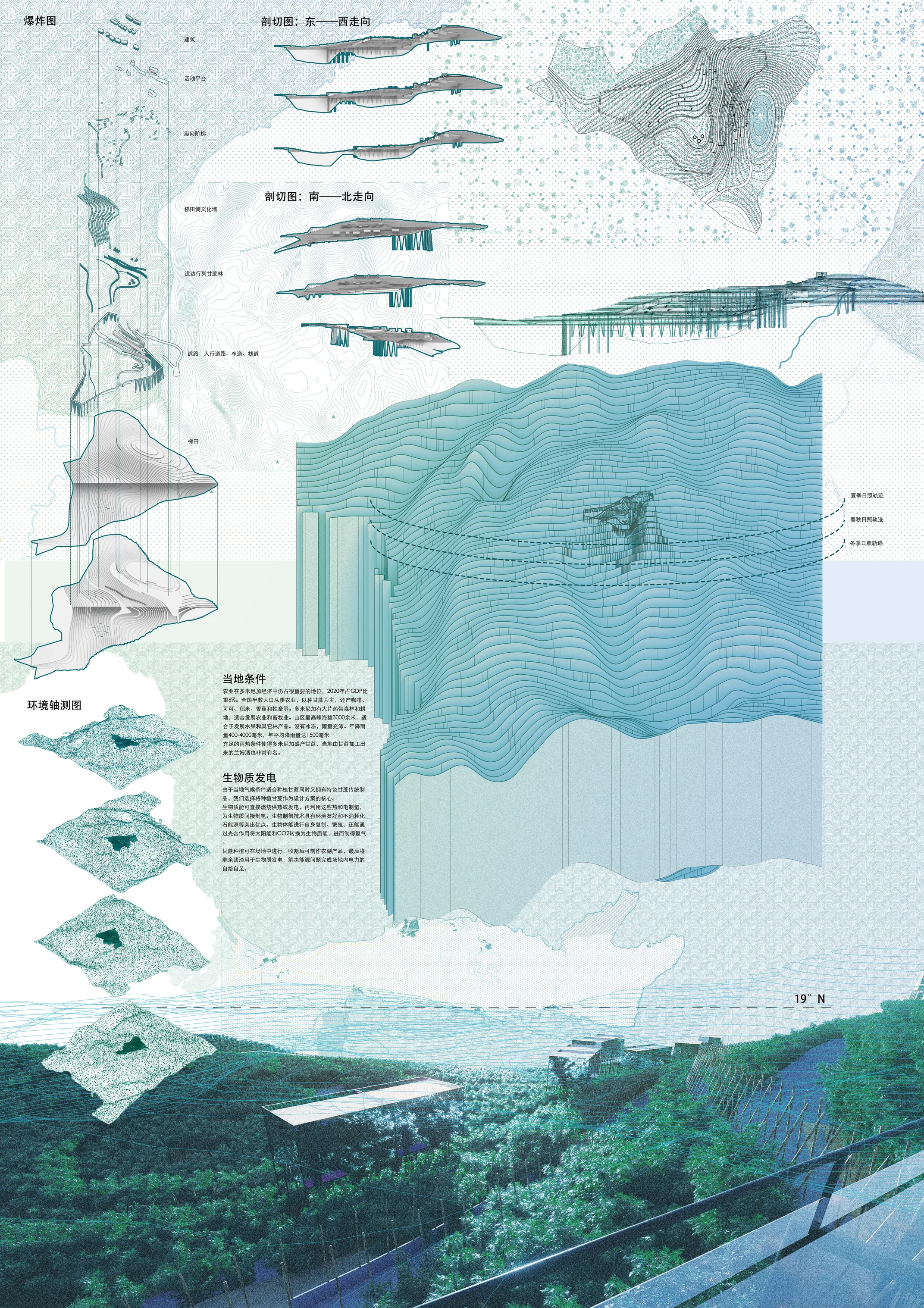
Agriculture still plays an important part in the economy of the Dominican Republic, 6% of GDP in 2020. Half of the population works in farming, mainly sugarcane, with coffee, cocoa, rice, bananas and livestock as well. The country has large areas of tropical forest and farmland suited to agriculture and animal husbandry. The highest mountain rises to more than 3,000 metres, suited to fruit and other forest products. There is no frost, and rain is plentiful, with 400 to 4,000 mm a year and 1,500 mm on average.
The heat and rain make the Dominican Republic rich in sugarcane, and the rum made from it is well known.
Translated from the Chinese original · Source: Board 2, “Local conditions”
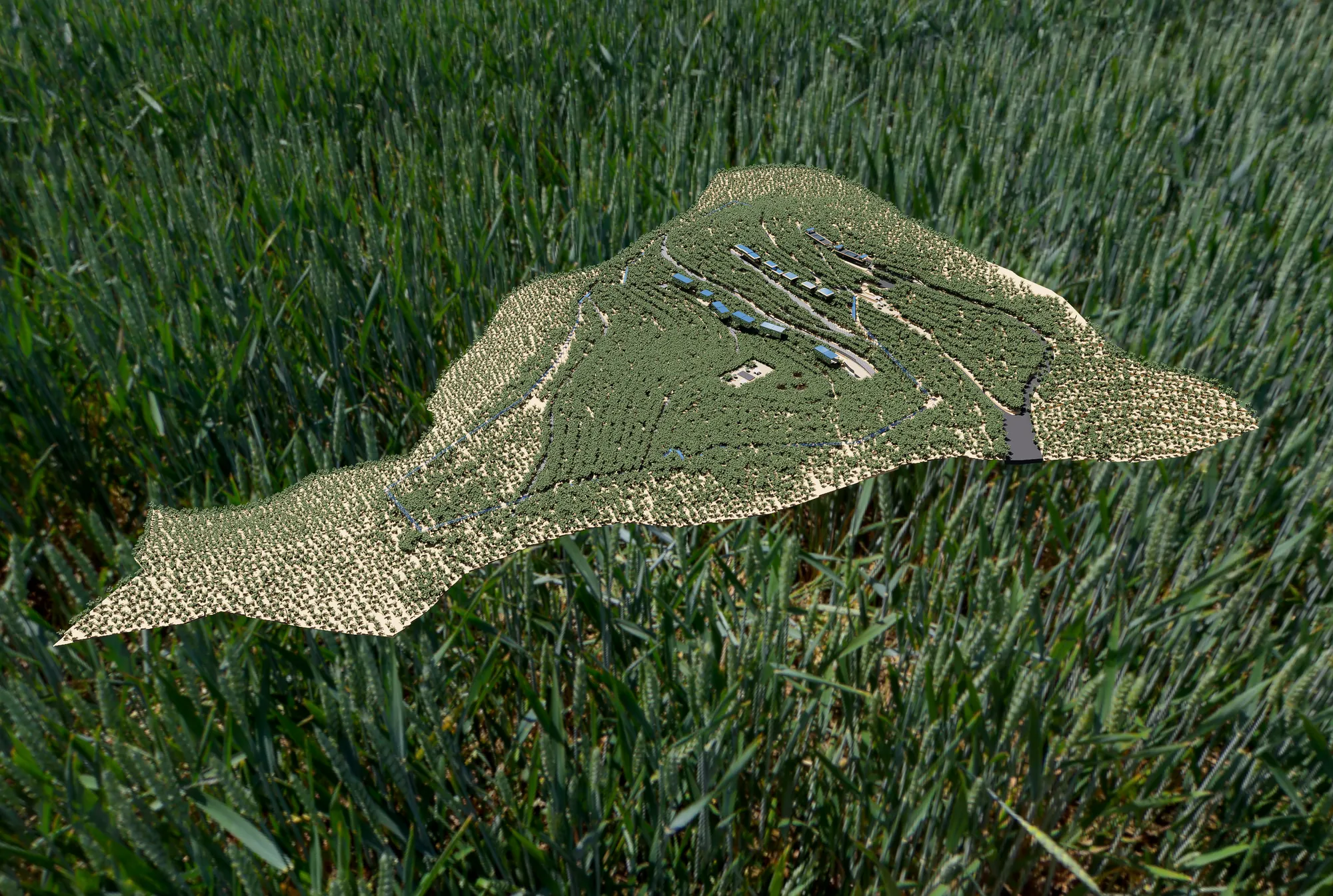
Energy first
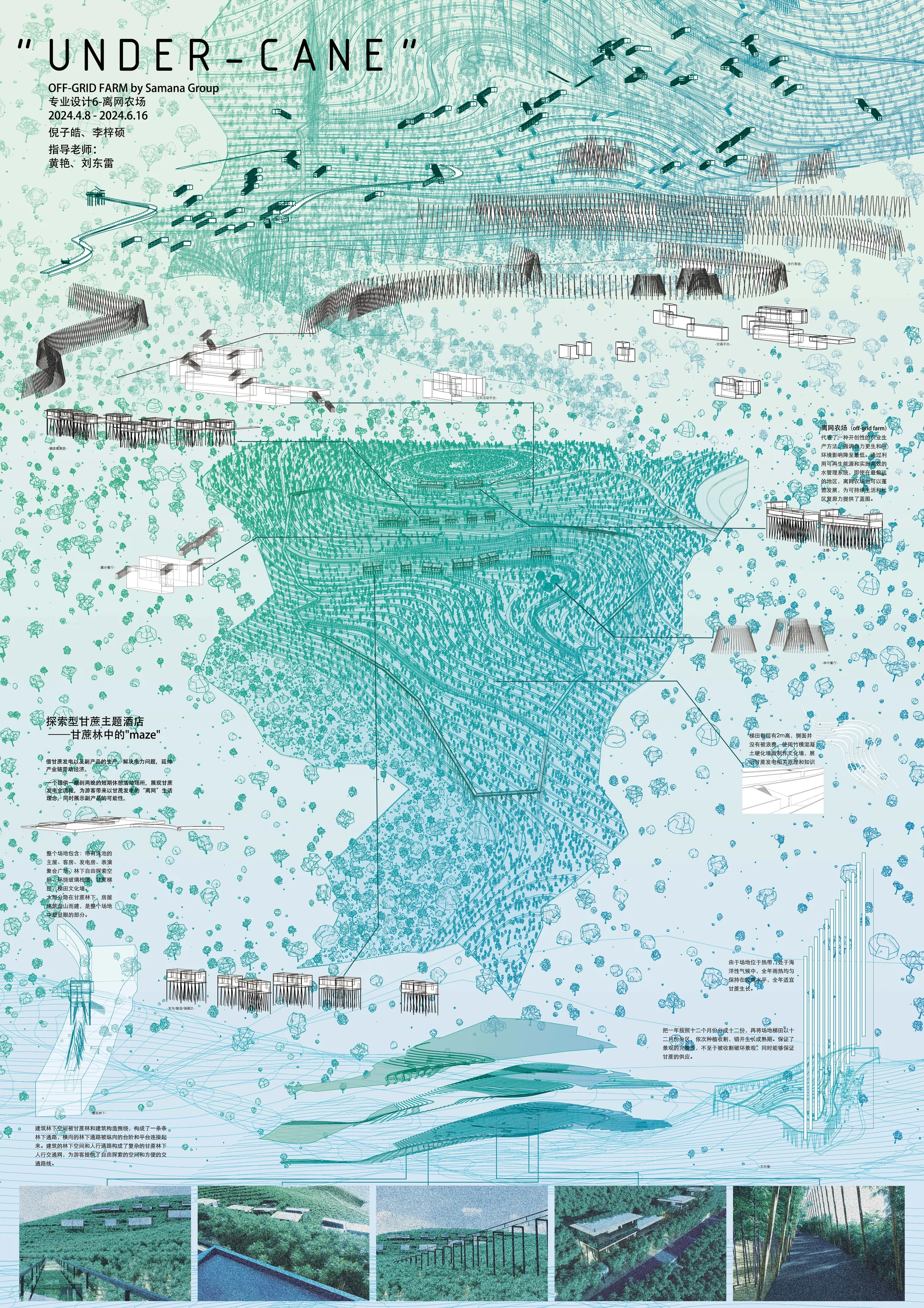
The competition brief asked for a “self-sufficient” off-grid farm and for sustainable development. This scheme approaches it through energy, solving the energy problem first and letting that drive the economy. Since tourism is one of the local pillar industries, the scheme proposes a resort hotel for short stays that uses new ways of obtaining energy, so that it can demonstrate biomass power from sugarcane cultivation, promote it through everyday exposure, and test it.
Translated from the Chinese original · Source: Design statement (Word document)
Use sugarcane power and the production of by-products to solve the electricity problem, and extend the industrial chain to drive the economy.
A place for short stays of one or two nights that shows the whole process of sugarcane power generation, offers visitors an ‘off-grid’ way of living powered by sugarcane, and shows what the by-products can become.
Translated from the Chinese original · Source: Board 1, “An exploratory sugarcane hotel: a maze in the cane”
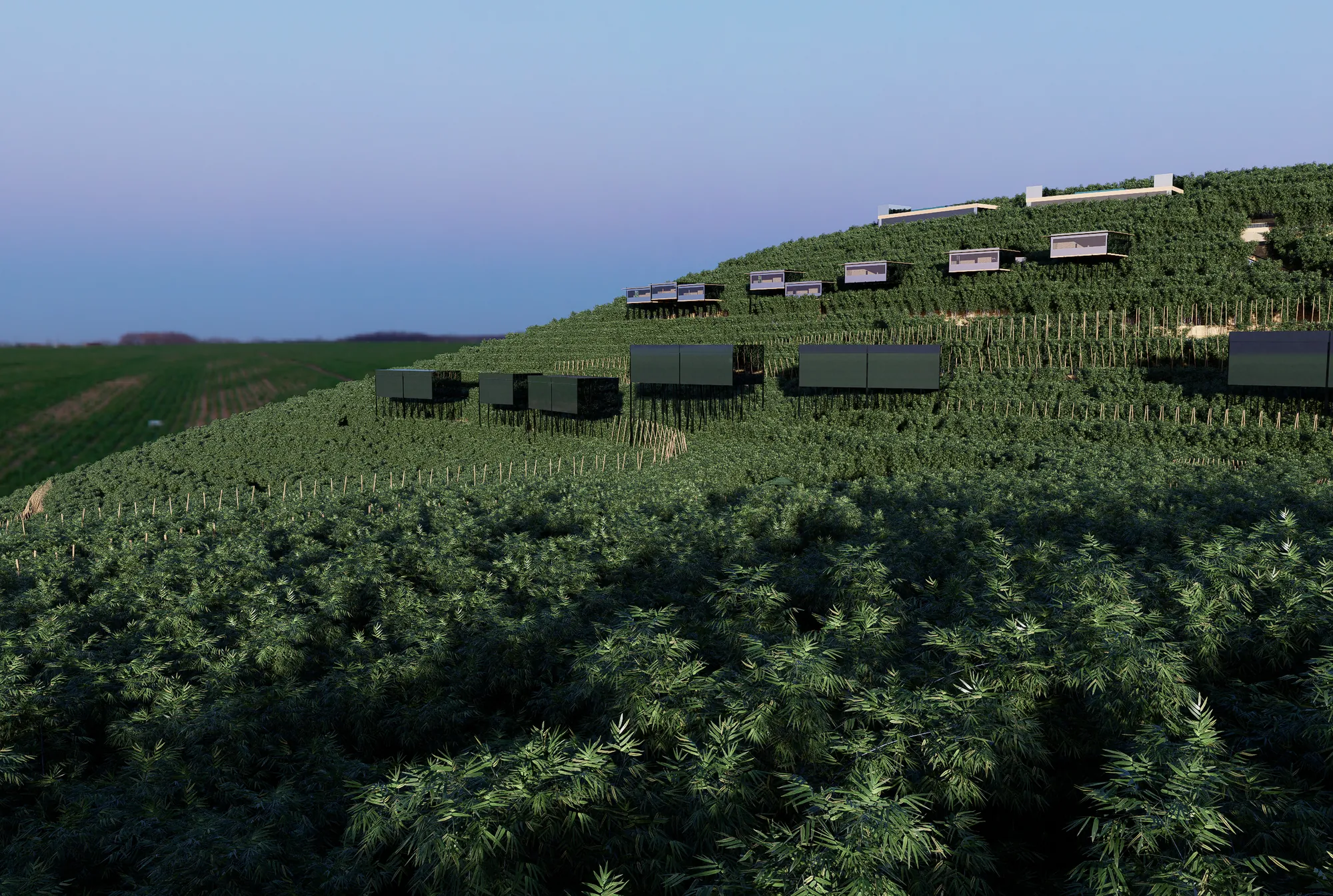
Plant, harvest, generate
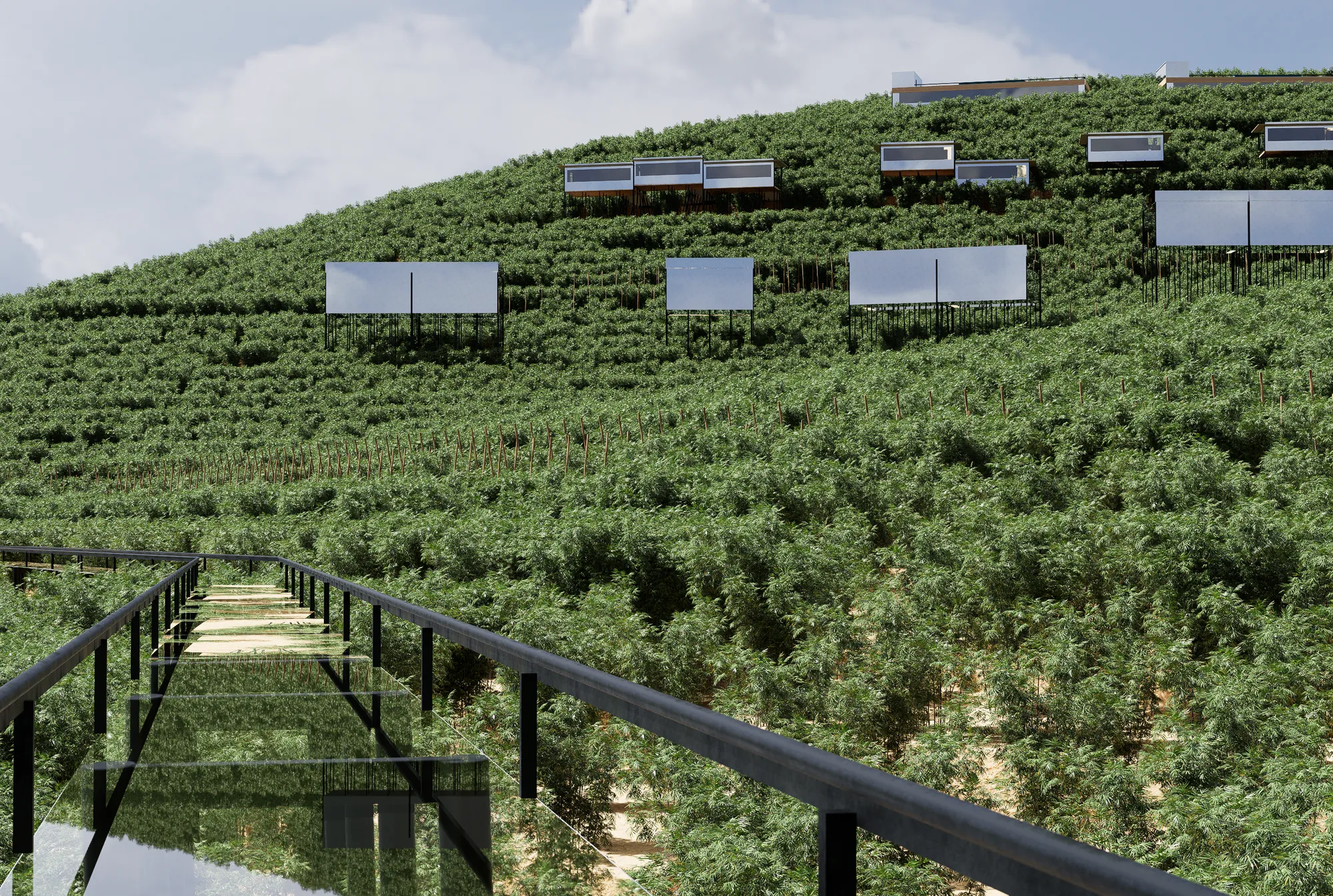
Everything starts from the sugarcane, with planting, harvesting and biomass generation all happening on the site. We therefore turned the site into terraces planted with cane. When it ripens it is harvested and processed, and the leftover residue goes to the biomass generator and the storage rooms.
Translated from the Chinese original · Source: Design statement (Word document)
Because the local climate suits sugarcane and the island has its own traditional cane products, we made growing sugarcane the core of the scheme.
Cane can be grown on the site, harvested and made into farm by-products, and the remaining residue is finally used for biomass power, solving the energy problem and making the site self-sufficient in electricity.
Translated from the Chinese original · Source: Board 2, “Biomass power” (excerpt)

Above and below the cane
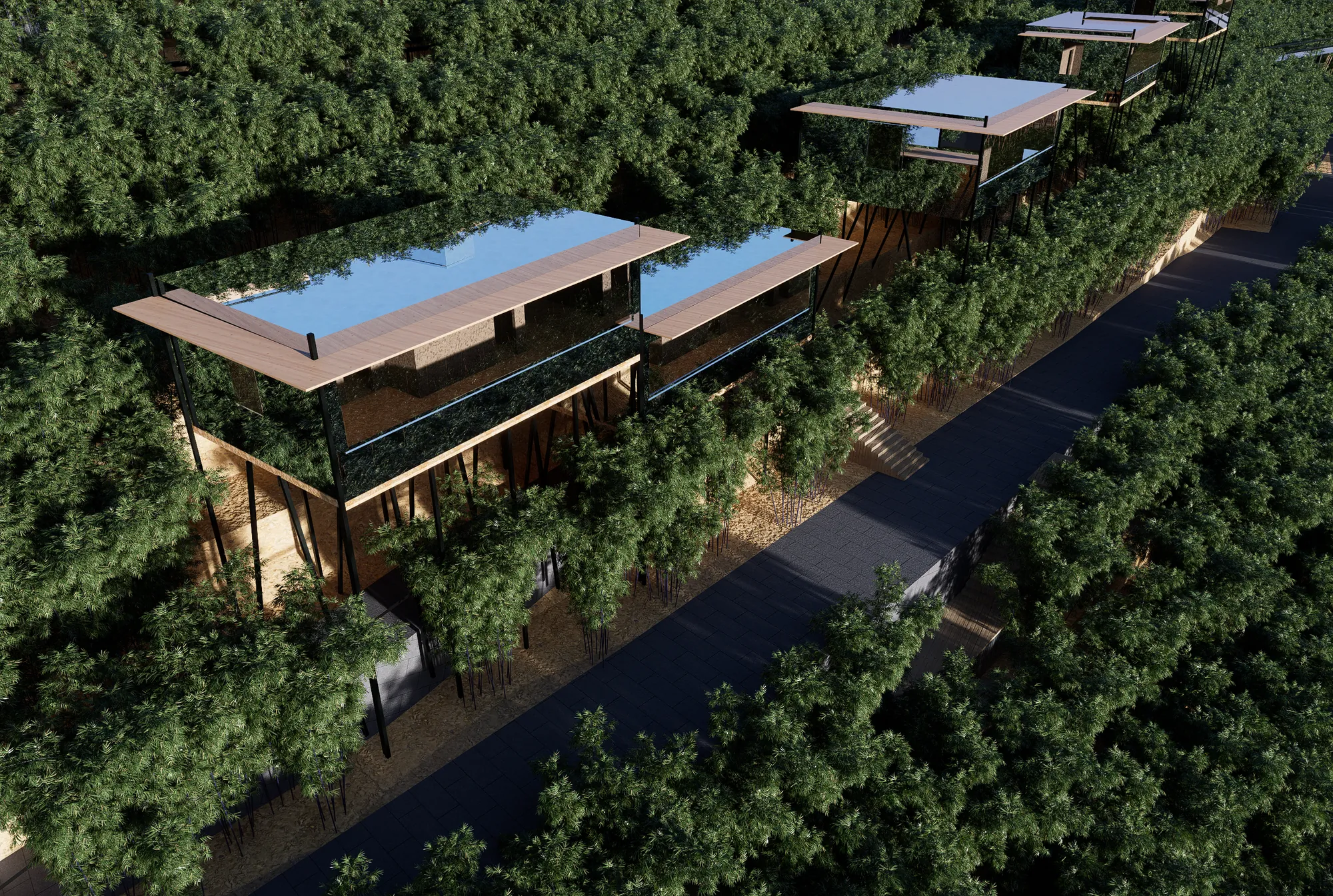
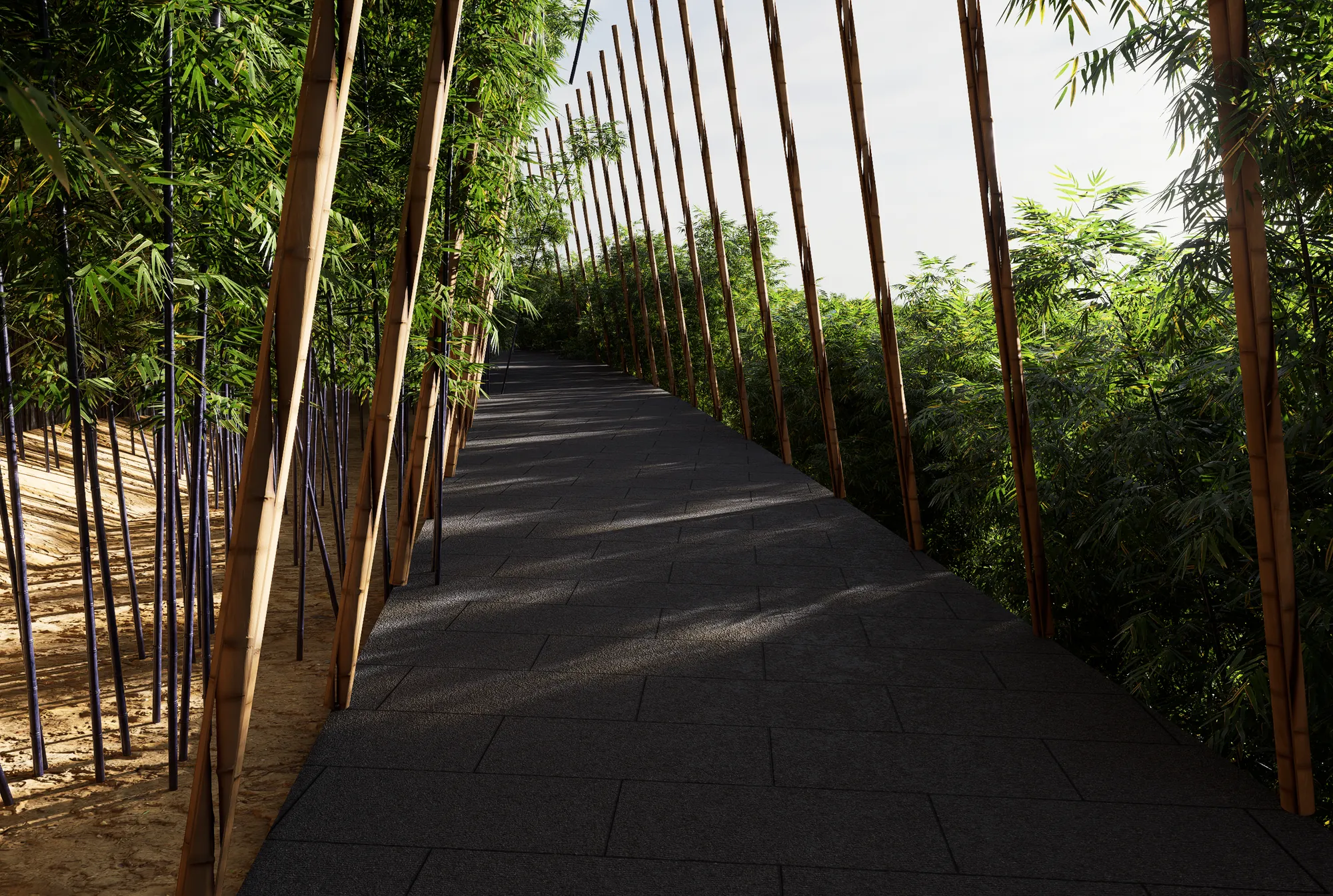
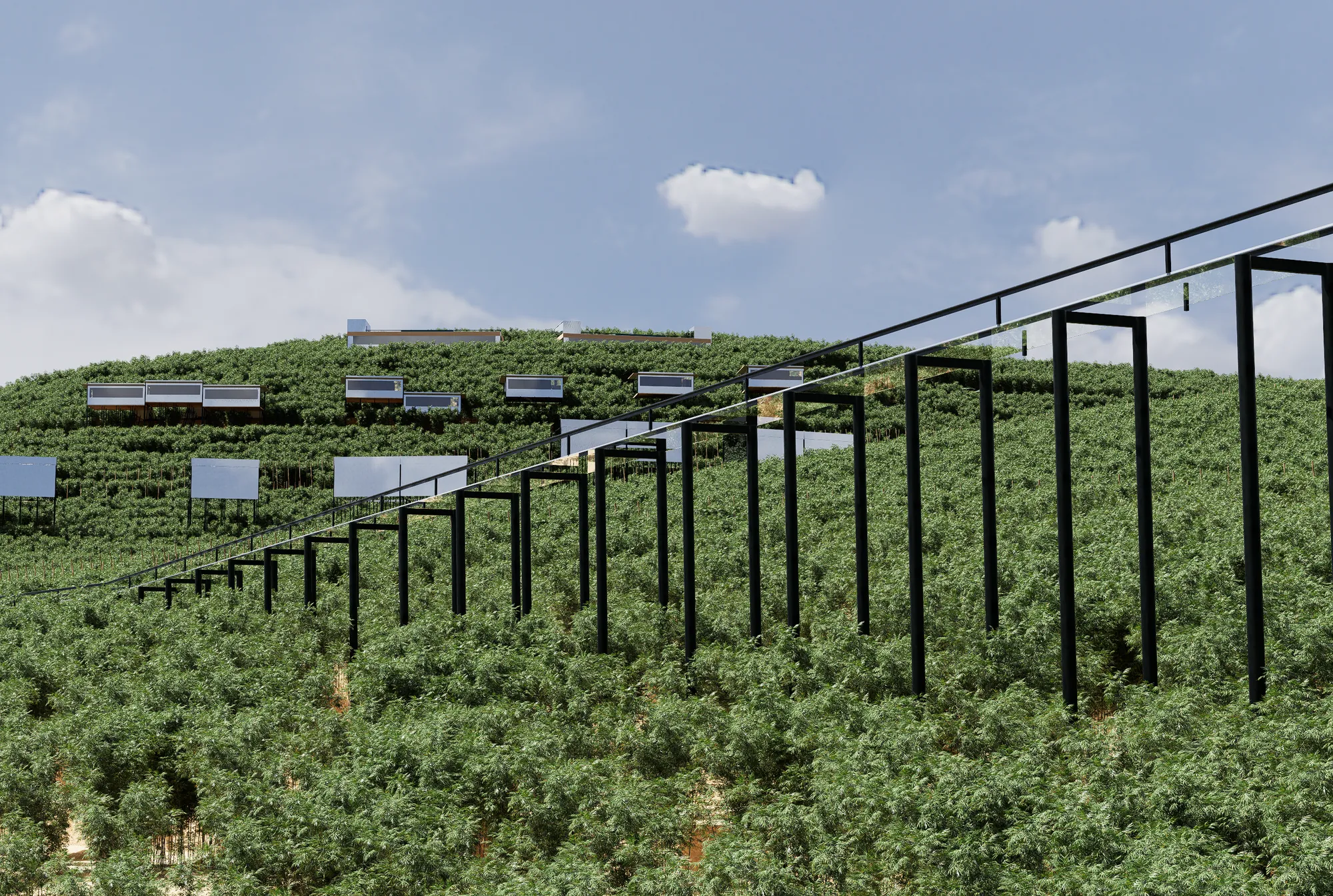
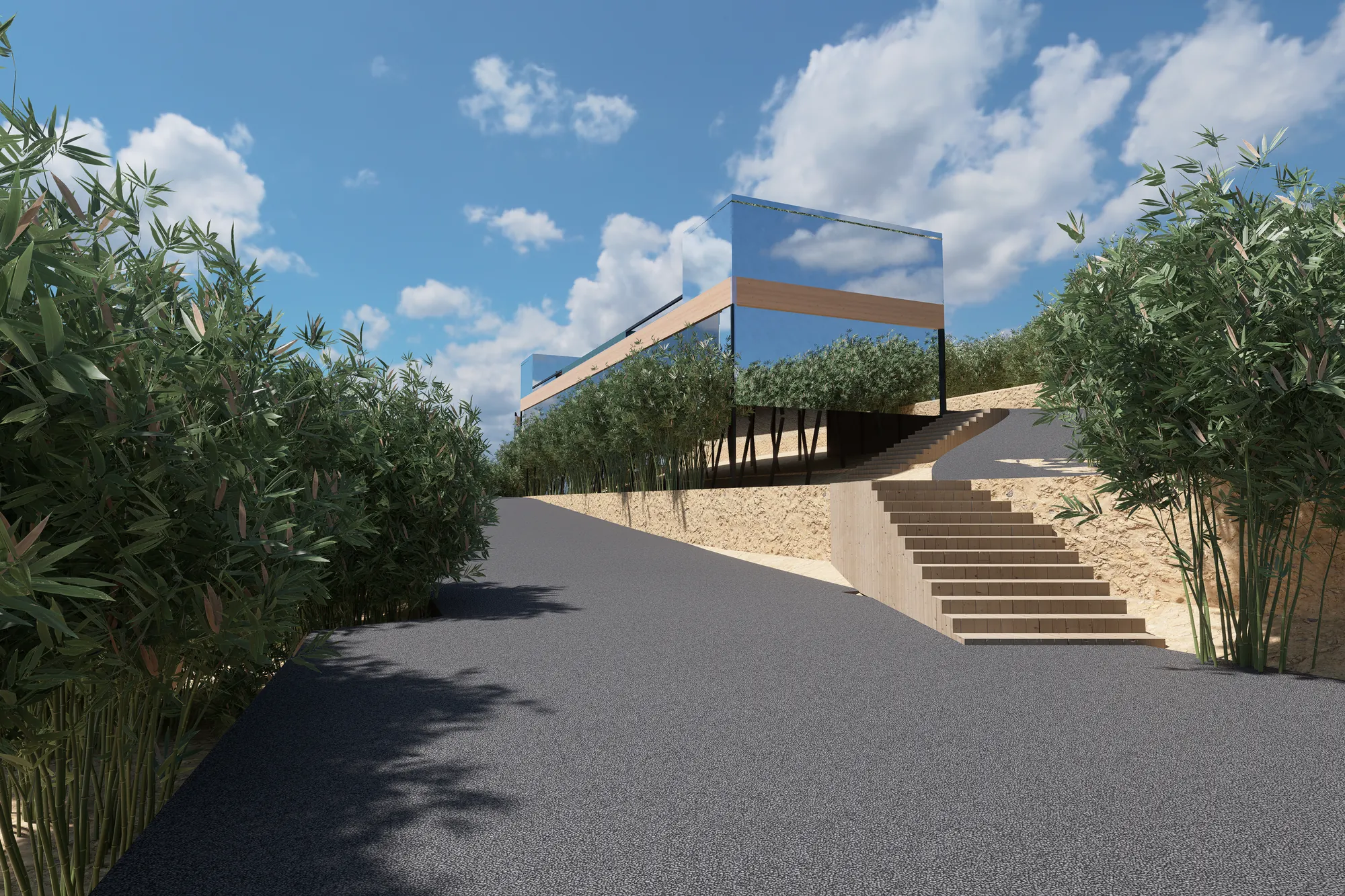
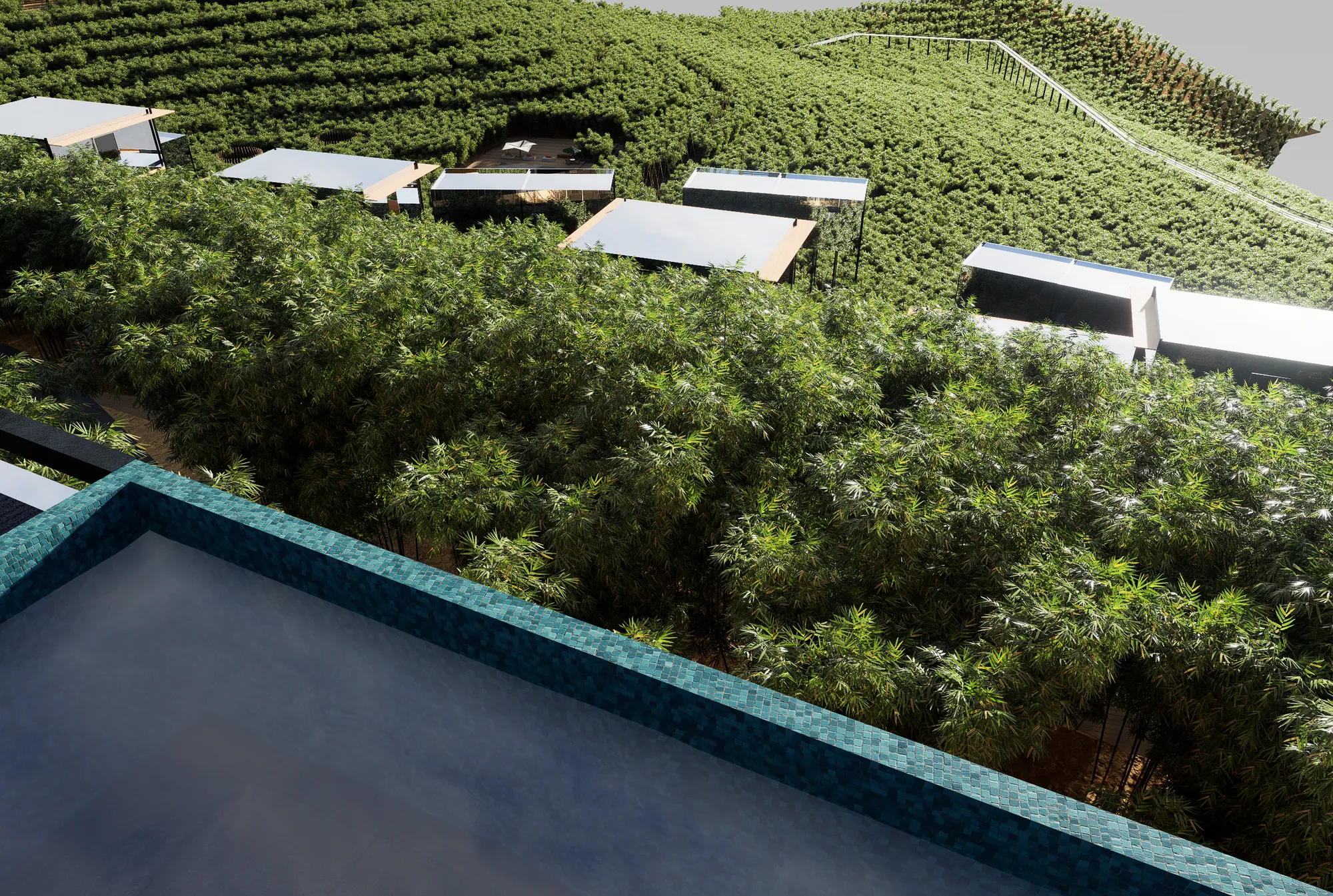
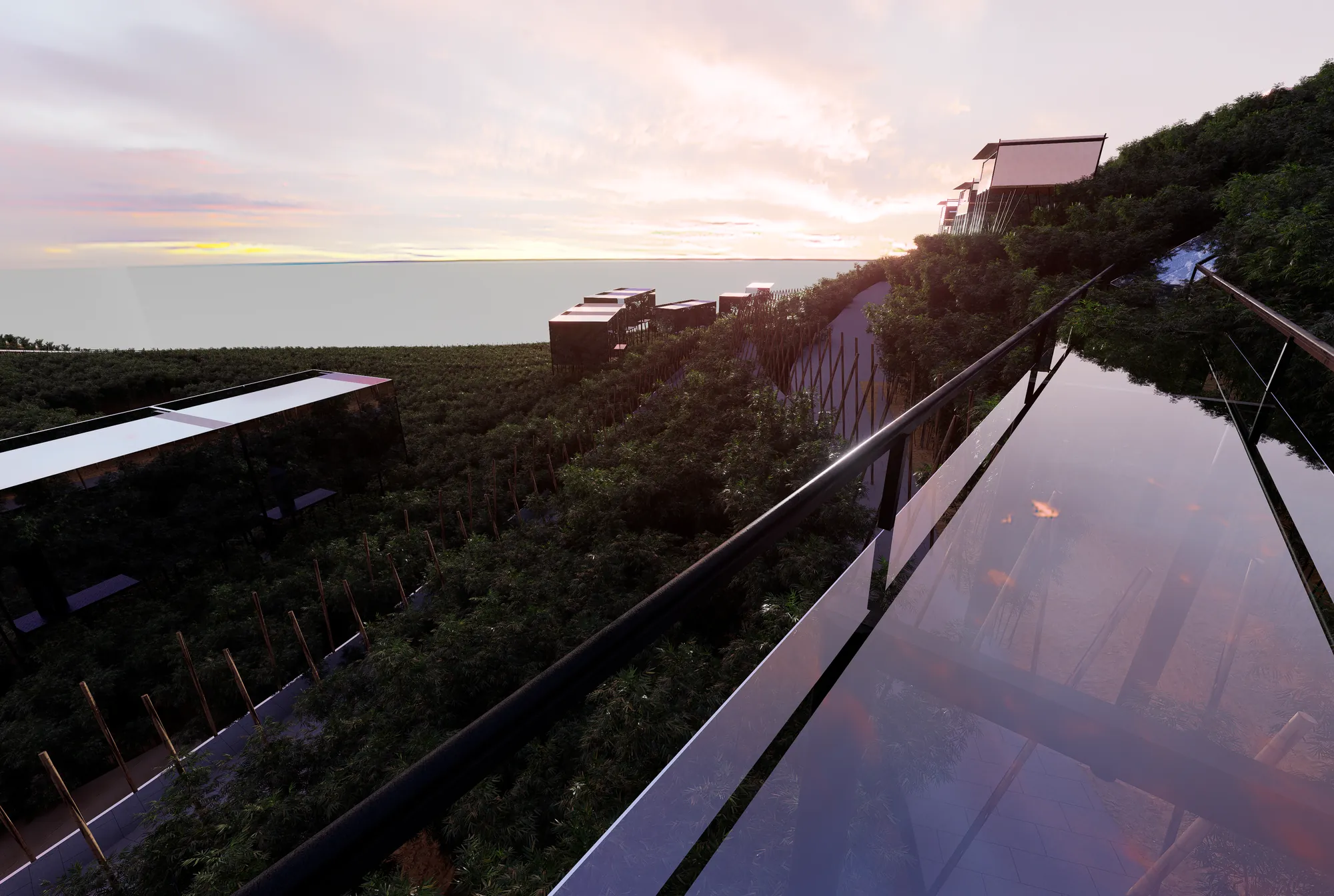
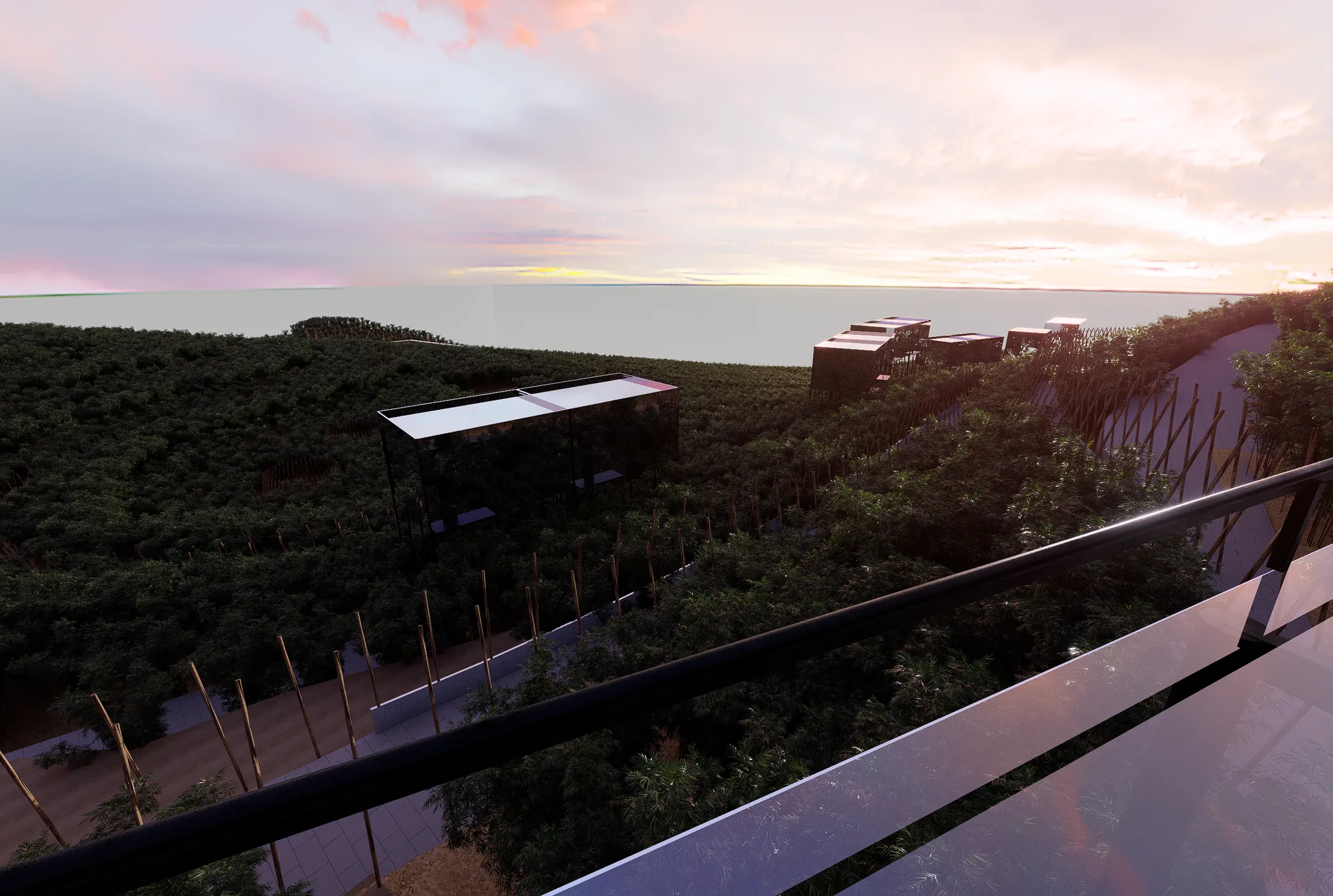
The form also starts from the cane, working with what lies “above the forest” and “below the forest”. The guest rooms and the main house sit above the sea of cane as “islands”. Below it is a large area of paths and activity space to explore freely. Out of respect for nature the buildings are mainly clad in mirror, which reflects the surrounding forest so that they disappear into it. The buildings are laid out like island chains. Three chains wind around the hill and give it a distinct order when seen from a distance.
Translated from the Chinese original · Source: Design statement (Word document)
Boards